The Journey of Ecuadorian Cacao to Becoming Known as the Golden Bean: CORA Tells Its Story


Before becoming chocolate, cacao was already part of the history of our land and of the people who learned to cultivate it generation after generation. Its story began among trees, communities, and fruits that held within them seeds capable of traveling across the world.
Over time, Ecuadorian cacao went from being part of the lives of ancient populations to becoming one of the great driving forces of the country’s economy. Its value became so significant that it earned a name that still carries part of that history today: the Golden Bean, or Pepa de Oro. But to understand why such a small seed came to represent so much, we have to return to the beginning: to the land, to the people who cultivated it, and to an Ecuador whose history can also be told through cacao.
A Story That Began Long Before Chocolate
Ecuador’s relationship with cacao did not begin with the first chocolate factories. It goes back much further. Archaeological evidence found at the Santa Ana–La Florida site in Palanda, Zamora Chinchipe, associated with the Mayo-Chinchipe culture, reveals the domestication and use of cacao approximately 5,300 years ago, long before chocolate existed as we know it today.
Thinking about this history changes the way we look at a chocolate bar. Cacao did not arrive in Ecuador and then become part of our identity: it had already been present in this territory for thousands of years. Over time, its cultivation expanded and knowledge surrounding the plant was passed down through generations. Each region learned to understand its rhythms: when to harvest, how to care for the pods, and how to handle the beans once the fruit was opened. Part of that knowledge remains present in cacao production today.

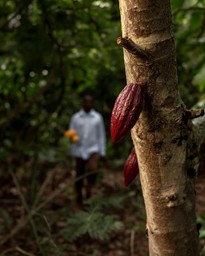
From Our Land to Other Parts of the World
Over time, Ecuadorian cacao began to travel. During the colonial period, its production became increasingly important and began reaching markets beyond the territory we now know as Ecuador. Demand grew, and different cacao-producing areas along the Coast began to develop around this crop.
Cacao no longer represented only a fruit of the land: it also became trade, work, and livelihood. Estates, trade routes, and cities grew around its production, while many people moved toward cacao-growing regions to take part in an activity that was beginning to transform the economy. Guayaquil took on a fundamental role as a departure point for cacao heading to international markets. In this way, every sack of cacao leaving the country carried more than beans: it carried a part of Ecuador.
When Ecuadorian Cacao Became the Golden Bean
Between the late nineteenth and early twentieth centuries, cacao experienced one of the most important periods in its history in Ecuador. Exports grew, placing the country among the major players in the international market, and by the end of the nineteenth century, Ecuador had become one of the world’s leading cacao exporters.
It was during this period that a name still associated with Ecuadorian cacao today gained strength: the Golden Bean, or Pepa de Oro. Its value was not limited to the fruit itself, but also to everything it set in motion around it. Cacao generated exports, trade, employment, and resources for a country that was becoming increasingly connected to international markets. It also helped drive different economic activities and contributed to the transformation of entire cities and regions.
A small seed had come to occupy an enormous place in Ecuadorian life. That is why talking about the Golden Bean does not simply mean remembering a period of prosperity, but also a time when an important part of the country’s development followed the path of cacao.
A Story Also Built Through Work
The great moments in cacao history are often told through numbers, exports, and markets, but behind all of them there have always been people. People who planted and harvested, who knew when a pod was ready, who removed its seeds, guided the fermentation process, and spread the cacao out to dry before it continued its journey.

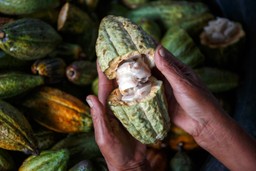
The story of the Golden Bean was also built in the fields, and that remains fundamental today. Through our journey across cacao-growing regions, we have had the opportunity to meet producers, communities, and people who care for cacao long before it reaches our hands as chocolate. That is why, when we tell its story, we also want to tell the stories of those who continue to make it possible.
You can learn more about them in our article on women cocoa farmers in Ecuador: the hands behind our chocolate.
The Golden Bean Also Faced Difficult Times
No story that stretches across so many years remains unchanged. After decades of growth, Ecuadorian cacao also went through difficult periods. Beginning with World War I in 1914, and especially around 1920, falling international prices, growing competition from other producing countries, and diseases such as monilia and witches’ broom began to weaken Ecuador’s great cacao boom. In the years that followed, production and exports lost some of the importance they had previously achieved.
But cacao did not disappear. It remained on farms, within communities, and in the knowledge of those who continued cultivating it. Perhaps this is one of the most important parts of its story: the value of Ecuadorian cacao outlived its own economic boom, because what made it special never depended only on how much could be exported, but also on its origin, its characteristics, and the people who continued working with it.
From Economic Value to the Value of Origin
Over time, the conversation around Ecuadorian cacao began to change. It was no longer only about how much the country produced, but also about understanding what kind of cacao Ecuador produced and what made it different.
Nacional cacao has historically been valued for its aromatic characteristics and its connection to fine flavor cacao. This recognition allows us to look at the Golden Bean from another perspective: its richness lies not only in what it once represented for the national economy, but also in its aromas, flavors, territories, and all the knowledge built around its cultivation.

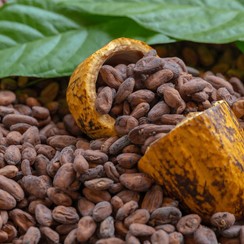
Today, when we talk about Ecuadorian fine flavor cacao, we are still talking about a story that began thousands of years ago and continues to evolve.
Cacao Still Has Stories to Tell
Ecuadorian cacao today exists in a very different reality from that of the great estates of the late nineteenth century, but its journey continues. It grows in different regions of the country, passes through harvesting, fermentation, drying, and selection, and still depends on the knowledge of those who work with it from the very beginning.
At CORA, we seek fine flavor cacao from certified cacao farms in Puerto Quito, Esmeraldas, and Tena, because we believe that knowing where our cacao comes from is also part of appreciating what we have. We do not want to focus only on the finished product. We want to understand what came before, which territory made it possible, who took part in its journey, and how we can recognize the work behind every bean.
This perspective is also part of the way we understand sustainable chocolate in Ecuador and the work of small-scale producers.
From the Golden Bean to a Chocolate Bar That Still Speaks of Ecuador
Today, cacao can reach our hands in a very different way than it did one hundred or one thousand years ago. It can become a 43%, 55%, or 70% cacao bar, come together with ingredients that also speak of our land, or become part of a moment we want to share.
But before all of that, the same starting point remains: cacao. A fruit that accompanied ancient populations of this territory, crossed oceans, helped move an important part of Ecuador’s economy, endured periods of crisis, and continues to grow thanks to producers and communities that keep its story alive.
That is why, for us, calling cacao the Golden Bean means much more than remembering a time of prosperity. It means recognizing everything it has represented for Ecuador and everything it can still represent.
Our Story Also Begins with a Cacao Pod
At CORA, we believe that making Ecuadorian chocolate also means knowing where we come from. Every bar begins long before the packaging: it begins in a land that has known cacao for thousands of years, in the people who learned to cultivate it, in the generations that preserved that knowledge, and in those who continue making it possible for Ecuadorian cacao to find new ways of reaching the world.
The Golden Bean does not belong only to the past. It continues to grow, continues to transform, and continues to tell a story that is deeply ours.
At CORA, we are fortunate to continue that story through chocolate.


