Every Cacao Tells a Story: Discover the Types of Ecuadorian Cacao


Talking about Ecuadorian cacao means talking about one fruit, but many stories. Stories that begin in different lands, grow under different conditions, and pass through the hands of people who have learned to understand cacao generation after generation.
Not all cacao pods are the same. And not all beans express the same aromas, flavors, or characteristics once they finally become chocolate. Behind those differences are the cacao variety, the territory where it grows, and everything that happens from harvest to drying.
That is why learning about the types of cacao found in Ecuador is also another way of getting to know our country. Each one speaks of a different time, a different need, and a different way of connecting with one of the fruits that represents us most.
When We Talk About Types of Cacao, What Do We Mean?
For years, it was common to hear cacao described simply as Criollo, Forastero, and Trinitario. However, when we look more closely at the history of Ecuadorian cacao, we discover that our reality is much more particular.
Ecuador has cacao materials that have accompanied the country for generations, as well as others that appeared much later in response to new agricultural challenges. Among them are two names that come up constantly when we talk about our production: Nacional and CCN-51.
Their stories are very different.
One is deeply connected to Ecuador’s cacao tradition and to the aromas that helped our cacao earn international recognition. The other was born from years of selection and research aimed at developing productive plants that could respond better to growing conditions.
Getting to know them is not about deciding which one is “better.” It is about understanding that there are different paths behind Ecuadorian chocolate, and each one has something of its own to tell.
Nacional Cacao: A Story That Has Spoken of Ecuador for Generations
Some names become inseparable from a place. Nacional cacao is one of them.
Its history is deeply connected to Ecuador’s cacao tradition and to the aromas that helped our cacao gain recognition beyond our borders. Its floral and fruity profiles, together with the characteristics traditionally associated with “Arriba” cacao, helped build part of the reputation the country still holds today.
But Nacional is not only about aroma.
It is also memory. It is the result of generations who learned how to grow cacao, understand the timing of the pod, and accompany each harvest. And like every story that stretches across so many years, it has also changed. Natural crossbreeding and coexistence with other cacao materials have created the great diversity that now exists within the cacao we associate with this heritage.
Perhaps that is why talking about Nacional does not mean talking about one identical plant repeated over and over again. It means talking about a story that has evolved alongside Ecuador’s agricultural landscape without losing what connects it to its origins.
If you would like to learn more about the aromas and characteristics that have made our cacao so highly regarded, you can continue with our article on what Ecuadorian fine flavor cacao is and why Ecuador is recognized worldwide.
CCN-51: A Different Story That Was Also Born Here
Not every story of Ecuadorian cacao began hundreds of years ago.
The story of CCN-51 is much more recent and reflects another part of our relationship with cacao: the ability to observe the challenges faced in the field and look for new answers.
This cacao was developed in Ecuador during the twentieth century by Homero Castro Zurita, after years of selection and work focused on obtaining a productive, adaptable plant with better possibilities for responding to some of the difficulties cacao crops faced.
Over time, it became part of farms in different regions of the country and today holds an important place within Ecuadorian cacao production.
Its story is different from that of Nacional, but both belong to the same land. One speaks to us of heritage and tradition; the other of research, adaptation, and an agricultural sector that has also had to evolve.
And even with a cacao developed to perform better in the field, the work of people remains essential. Harvesting, fermentation, and drying can all influence the way its flavors and aromas are ultimately expressed in chocolate.
Because no variety tells its story alone.

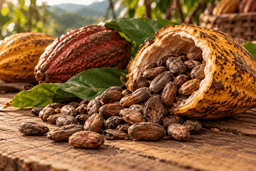
The Diversity of Ecuadorian Cacao Continues to Grow
Nacional and CCN-51 help us understand two major paths within cacao in Ecuador, but our diversity does not end there.
For decades, producers and researchers have continued observing trees, selecting cacao materials, and looking for ways to preserve the qualities that make Ecuadorian cacao special while responding to challenges such as disease, productivity, and the different conditions found in each region.
That work is also part of our story.
The cacao we grow today is the result of everything we have learned from it: from the plants that remained, those that crossed naturally, those that were selected, and the people who continue studying how to care for cacao and help it grow.
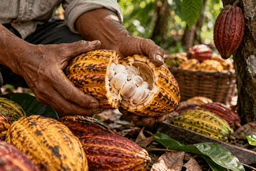
That is why Ecuadorian cacao is not something frozen in time. It has deep roots, but it continues to change alongside the people who grow it, study it, and find new ways to preserve its value.
And that diversity becomes even more interesting when cacao leaves theory behind and returns to the place where its story truly begins: the land where it grows.
The Same Cacao Can Tell Different Stories Depending on Where It Grows
From this point onward, I would keep the rest of the blog almost exactly as it is.
This change allows Nacional and CCN-51 to remain accurately explained, but through a narrative of heritage vs. evolution, rather than making the section feel like a technical classification. The final sentence also connects much more naturally with the next section about territory.


