Women Cacao Farmers in Ecuador: The Hands Behind Our Chocolate


cacao percentage, or the ingredients that accompany it.
But before reaching your hands, that bar has already traveled a long way.
That journey begins among cacao trees, with pods waiting for the right moment to be harvested and with people who know every stage of the process firsthand. In Ecuador, women cacao farmers take part in growing, harvesting, selecting, drying, and caring for the cacao that will eventually become chocolate.
Understanding where it comes from also changes the way we enjoy it. Behind every bar are territories, communities, and Ecuadorian hands that make its story possible.
It All Begins in the Soil
Before becoming chocolate, cacao is the fruit of a tree that requires time, knowledge, and constant care.
On the farms, every pod requires attention. Farmers need to recognize when it is ready and understand what the crop needs at each stage. It is knowledge learned through experience, passed down from generation to generation, and carried into every harvest.

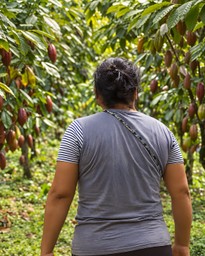
On many of these farms, cacao does not grow alone. It shares the land with plantain and other species that help protect the soil and allow the land to produce in different ways. This way of farming understands that the richness of the land also comes from everything that grows alongside it.
The images we have captured together with these communities remind us of this first point of origin. Trees surrounded by vegetation, pods at different stages of ripeness, and producers who know the fruit they work with. This is where a story begins that we will later be able to taste.
Women Who Know Cacao from Its Origin
The work of women cacao farmers does not end when a pod is removed from the tree.
Depending on each community and organization, their role may include cultivation, harvesting, fruit selection, opening the pods, handling the beans, drying, commercialization, or community organization. These are different tasks, connected by the knowledge and patience that every cacao bean requires.
That is why Ecuadorian fine-flavor cacao cannot be explained only through its notes, aromas, or quality. It also tells the story of everything that happens before the bean is transformed into chocolate.
Giving visibility to these women is not about idealizing work in the countryside, but about recognizing it and understanding that every agricultural product is supported by people who sustain its journey every day.
When the Pod Opens, Another Part of the Story Begins
Opening a cacao pod reveals a world we rarely imagine when looking at a finished chocolate bar. Inside are the seeds, covered in white pulp. There is still a long way to go before they resemble the chocolate we know.

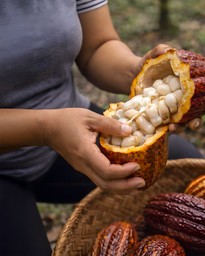
After harvesting, the way cacao is handled is just as important as how it is grown. Fermentation and drying help develop the characteristics of the bean and prepare it for the next stages. The beans are covered, carefully turned, and dried under conditions that require constant attention.
In the footage we have captured in the field, we see fermentation boxes covered with jute, large surfaces filled with cacao drying in the open air, and people checking the beans again and again. They are simple scenes that reveal the time, skill, and patience behind every bite.
From Esmeraldas to Tena, Cacao Continues to Find Hands
In Esmeraldas, cacao’s journey also passes through collection centers, where the beans continue through selection, drying, and preparation before moving on to the next stage.
There, we spoke with Roxana Arias, who closely accompanies this part of the process alongside the drying beds.
Her work shows that the cacao chain does not exist only within the farms. The quality of a chocolate bar begins to take shape long before cacao enters a factory, through every step of care the bean receives and every person who accompanies it along the way.

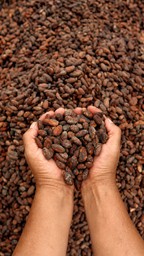
The journey also reaches Tena, in the Ecuadorian Amazon. There, cacao is part of production systems that maintain a close relationship with the forest, the community, and knowledge passed down from generation to generation.
Together with Giovanny Grefa from the Kallari Association, we learned more about the work that supports producer families in the area. Kallari produces cacao under the Amazonian chakra system, a model in which cacao grows alongside different plants and crops and is closely connected to the preservation of Kichwa culture and the natural environment.
This work is recognized through the Amazonian Chakra Seal, a Participatory Guarantee System that acknowledges the responsible practices of producer communities and is supported by the FAO and the Forest and Farm Facility.
In these territories, growing cacao also sustains community, identity, and opportunities for families. It is a way of building both life and livelihoods from their own place of origin.
Choosing Chocolate Also Means Looking at Its Story
At Cora, we source fine-flavor cacao from certified cacao farms in Puerto Quito, Esmeraldas, and Tena. We care about knowing where our raw materials come from, following their traceability, and building responsible relationships with the environment and producer communities.
Quality should not begin to be discussed only when cacao enters a factory. It is built from the soil, continues through harvesting, passes through fermentation, drying, and selection, and depends on the people present at every stage.
The next time you have a Cora bar in front of you, look a little beyond the packaging. Its flavor comes from a cacao pod, from harvesting and drying, and from the hands that cared for the cacao so it could continue its journey.
Fine-flavor cacao stands out for its flavor, aromas, and characteristics. But one of the most valuable parts of its story is also found in the hands that grow and care for it.
Getting to know Ecuador’s women cacao farmers means discovering a little more about everything behind our chocolate.
If you would like to continue discovering Cora’s origins, you can also read our article on what fine-flavor cacao is and why Ecuador is recognized worldwide, as well as our article on sustainable chocolate in Ecuador and small-scale producers.


